
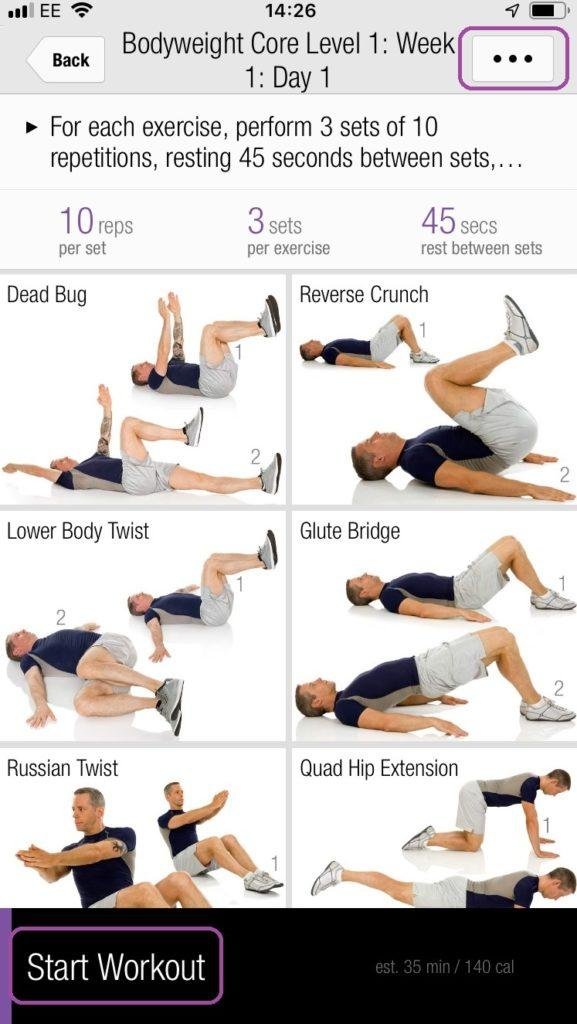
When it comes to building a strong, resilient body, the core is undeniably the centerpiece. More than just achieving visible abs, an effective core workout enhances overall strength, stability, and balance — essential elements for daily movement and athletic performance alike. Whether you’re recovering from injury, looking to improve posture, or aiming to boost your workout results, focusing on core training should be a priority. In this article, we’ll explore the most effective core workouts designed to develop strength and stability, helping you build a solid foundation that supports every aspect of your fitness journey.
Table of Contents
- Understanding the Fundamentals of Core Strength and Stability
- Key Muscle Groups Engaged in Effective Core Training
- Targeted Exercises to Enhance Core Endurance and Power
- Designing a Balanced Core workout Routine for Optimal Results
- in Summary
Understanding the Fundamentals of core Strength and Stability
Core strength extends far beyond having visible six-pack abs; it is the foundation for almost every movement in daily life and athletic performance. The core encompasses more than just the abdominal muscles—it includes the pelvic floor, obliques, lower back, and diaphragm, all working in unison to stabilize the spine and pelvis. This intricate support system acts as a natural brace, enabling you to maintain balance, posture, and proper alignment under a variety of physical demands.
Understanding the mechanics behind core stability can dramatically shift your approach to workouts for the better. Rather of simply training for muscle size or definition, emphasis should be placed on improving muscular endurance, coordination, and control.A well-developed core contributes to:
- Reduced risk of injury by stabilizing joints and distributing forces efficiently
- Improved athletic performance through enhanced power transfer and agility
- Better posture and spinal health by engaging deep stabilizer muscles
- Enhanced breathing and movement efficiency by coordinating core and respiratory muscles
Key Muscle Groups Engaged in Effective Core Training
building a strong and stable core involves targeting a network of interconnected muscles that work in harmony to support your body during movement.Central to this system are the
Complementing these are the obliques, which lie on the sides of your core and facilitate rotational movements and lateral stability. They play a vital role in controlling trunk rotation and preventing injuries during twisting motions.Additionally, the erector spinae and multifidus muscles along the spine contribute to spinal extension and robust back support. Don’t overlook the role of the pelvic floor and diaphragm, which work synergistically with your abdominal wall to regulate intra-abdominal pressure and enhance core stabilization. Effective core training addresses each of these muscle groups through carefully designed exercises that challenge both strength and endurance.
- Rectus Abdominis: Spinal flexion and stabilization
- Transverse Abdominis: Deep core stabilizer and pressure regulator
- Obliques (Internal and External): Rotation and lateral flexion
- Erector Spinae & Multifidus: Spinal extension and posture maintenance
- Pelvic Floor & Diaphragm: Core pressure modulation and balance
Targeted Exercises to Enhance Core Endurance and Power
Building a resilient and powerful core requires exercises that not only challenge endurance but also cultivate explosive strength. Incorporating movements like plank variations, Russian twists, and hanging leg raises helps in developing sustained muscle engagement, essential for everyday stability and athletic performance.These exercises target the deep stabilizing muscles of the abdomen, hips, and lower back, promoting better posture and reducing injury risks. Regularly progressing these workouts by increasing hold times or adding resistance enhances the core’s ability to maintain control under fatigue.
To elevate power output, integrating dynamic, plyometric core exercises is crucial. Activities such as medicine ball slams, cable woodchoppers, and explosive mountain climbers train the core to generate sudden bursts of force, improving overall athleticism and functional strength. This blend of endurance and power training ensures a versatile core capable of adapting to complex movements, whether on the field or in daily life. Consistency and proper form remain key in unlocking the full potential of these targeted routines.
- Plank variations: Forearm, side, and reverse planks
- Russian twists: Weighted for added resistance
- Hanging leg raises: Builds lower abdominal strength
- Medicine ball slams: Explosive power development
- Cable woodchoppers: Rotational strength and control
- Explosive mountain climbers: Combines endurance and speed
Designing a Balanced Core Workout Routine for Optimal results
achieving a well-rounded core workout demands a strategic approach that targets all the key muscle groups — including the rectus abdominis, obliques, transverse abdominis, and lower back. A balanced routine not only boosts strength but also enhances overall stability and posture, reducing the risk of injury during everyday activities and other forms of exercise. Incorporating a variety of movements ensures no muscle is neglected.For instance, rotational exercises activate the obliques, while static holds like planks engage the deeper stabilizing muscles that often go unnoticed in traditional crunches.
To maximize effectiveness, consider structuring your routine around the following principles:
- Variety: Blend dynamic and isometric exercises to work both endurance and strength.
- Progression: Gradually increase resistance or duration to continuously challenge the core.
- Form Focus: Prioritize proper technique over reps to prevent strain and maximize engagement.
- Recovery: Allow adequate rest between sessions to enable muscle repair and growth.
In summary
Incorporating effective core workouts into your fitness routine is essential not only for building strength but also for enhancing overall stability and injury prevention. By focusing on targeted exercises that engage all layers of your core muscles,you lay the foundation for improved posture,better athletic performance,and daily functional strength. Remember, consistency and proper technique are key to maximizing the benefits and avoiding setbacks. Prioritize your core health today, and you’ll set yourself up for a stronger, more resilient body tomorrow.